Pain, headaches & mobility
Hands-on care for back and neck pain, persistent headaches, joint stiffness and acute or chronic musculoskeletal conditions.
Back · neck · joints · chronic painPersonal care. Practical progress.
Hands-on physiotherapy shaped around you, backed by more than 20 years of experience. Now offering MedWave red light therapy at Taunton Road.

Arisha Singh · BSc Physio (UWC)
A considered approach
Your appointment is yours alone. No shared treatment time, no conveyor belt and no generic plan. Arisha combines hands-on physiotherapy with an interest in wellness and mindfulness to support the person, not only the symptom.
Services
Every treatment plan begins with an individual assessment and a clear conversation about what matters to you.
Hands-on care for back and neck pain, persistent headaches, joint stiffness and acute or chronic musculoskeletal conditions.
Back · neck · joints · chronic painA measured path back to movement and confidence following injury, surgery or prolonged physical limitation.
Recovery · strength · functionIndividual treatment plans for neurological and respiratory conditions, including age-appropriate care for children.
Breathing · nerves · paediatricsGentle, clinically informed treatment designed to support circulation and help manage swelling associated with lymphatic conditions.
Swelling · circulation · comfortShort, non-invasive red and near-infrared light sessions offered as complementary support for recovery, pain and tissue wellbeing.
Available at Taunton Road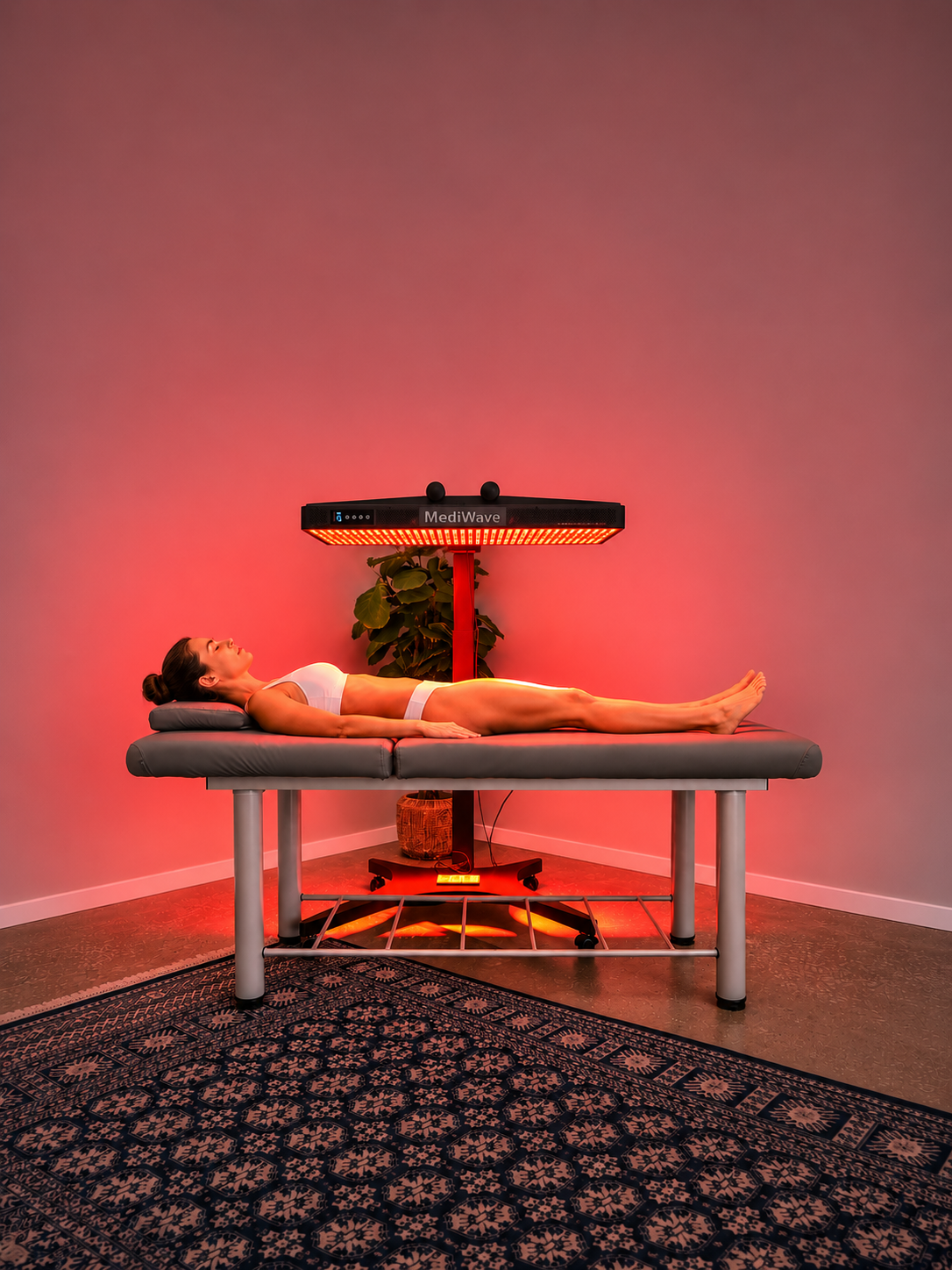 Red + near-infrared light
New at Taunton Road
MedWave uses specific wavelengths of red and near-infrared light in short, non-invasive sessions. Arisha will assess whether it belongs in your care plan and explain what you can realistically expect.
Complementary care only. Individual results vary and medical concerns should be assessed by a qualified healthcare professional.
The basics
Red light therapy—clinically called photobiomodulation—uses selected wavelengths of visible red and near-infrared light. A session is non-invasive: no needles, medication or UV exposure, and no expected recovery time.
Photobiomodulation research examines how red and near-infrared light may influence mitochondrial activity and ATP, the energy cells use for normal repair work.
Light exposure may influence nitric-oxide signalling and local microcirculation, supporting oxygen and nutrient delivery to the treated area.
Studies are exploring how specific doses can affect inflammatory pathways. The response depends on the condition, wavelength and treatment plan.
The aim is to support the body’s existing recovery processes. It does not replace diagnosis, wound care, medication or other necessary treatment.
The science is dose- and condition-specific. A plausible biological mechanism does not guarantee a clinical result for every person.
Where MedWave may fit
These are treatment conversations, not self-diagnoses. Arisha will assess your goal and tell you plainly whether MedWave belongs in the plan.
For persistent musculoskeletal aches, stiffness and recovery support in areas such as the back, neck, shoulders, knees, hips, elbows, heels, hands and wrists.
Surface-level red light may support skin tone, texture, collagen activity and recovery after appropriate cosmetic procedures.
MedWave positions its 635nm panel as a complement to nutrition and movement for body-contouring goals. It is not surgery or a weight-loss guarantee.
Red and near-infrared light may be considered alongside clinician-led management for tissue repair and some nerve-related symptoms—never instead of medical care.

Pain & recovery
Near-infrared light is used for deeper targets such as muscle, joint and connective tissue. In practice, it may be considered for persistent aches, stiffness and recovery support.
It can sit alongside physiotherapy, exercise and other clinician-led care. The treatment is supportive; it does not explain the cause of pain or replace a proper assessment.
Common areas: lower back · neck · shoulders · knees · hips · elbows · heels · hands · wrists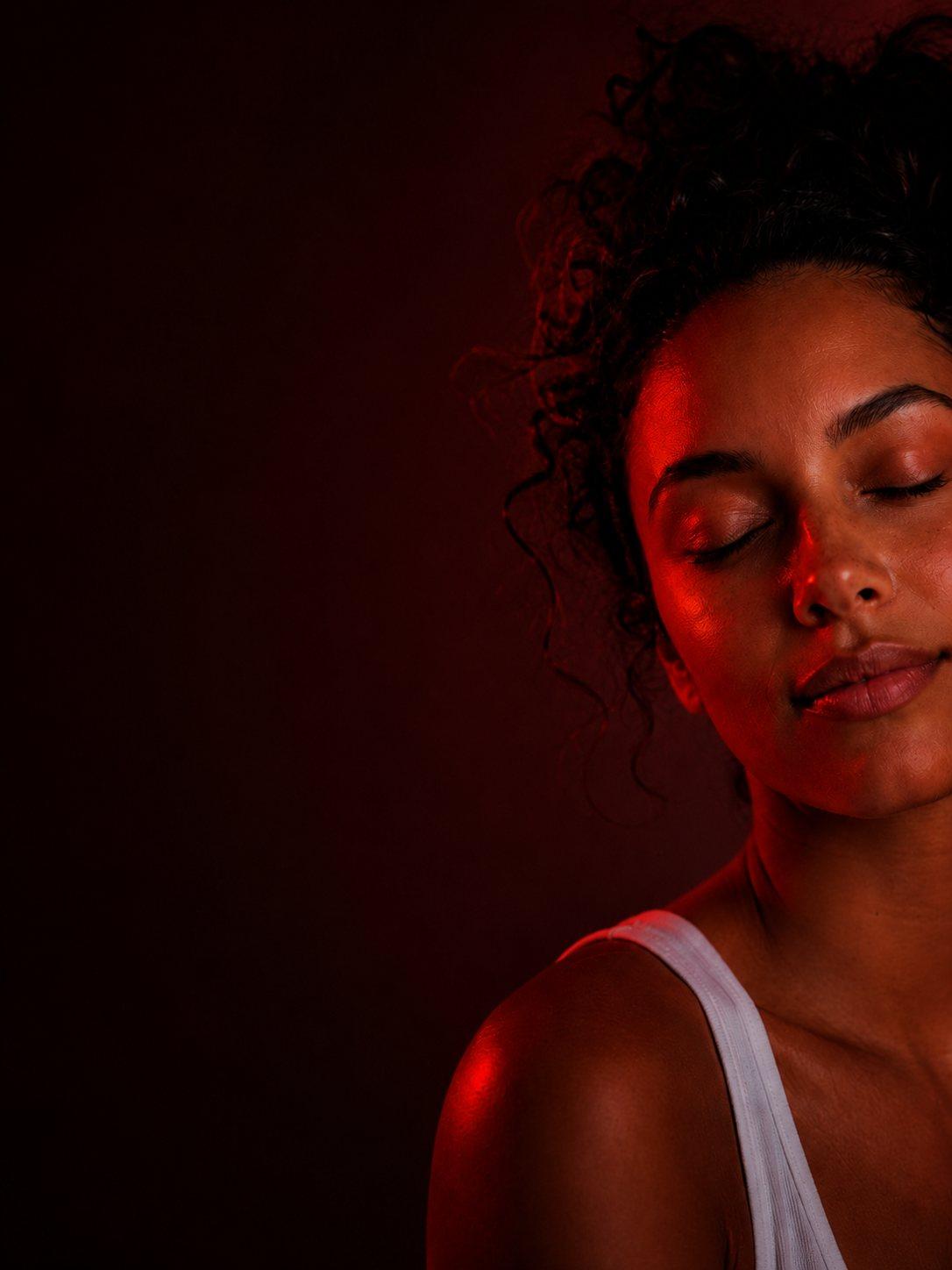
Skin & collagen
Visible red light at 635nm is used at skin level, where photobiomodulation research has examined fibroblast activity, collagen, tone and tissue recovery.
It may also be considered after peels, lasers or needling when the treating practitioner says it is appropriate. Timing matters, so disclose recent procedures before booking.
Common areas: face · neck · décolletage · hands · scars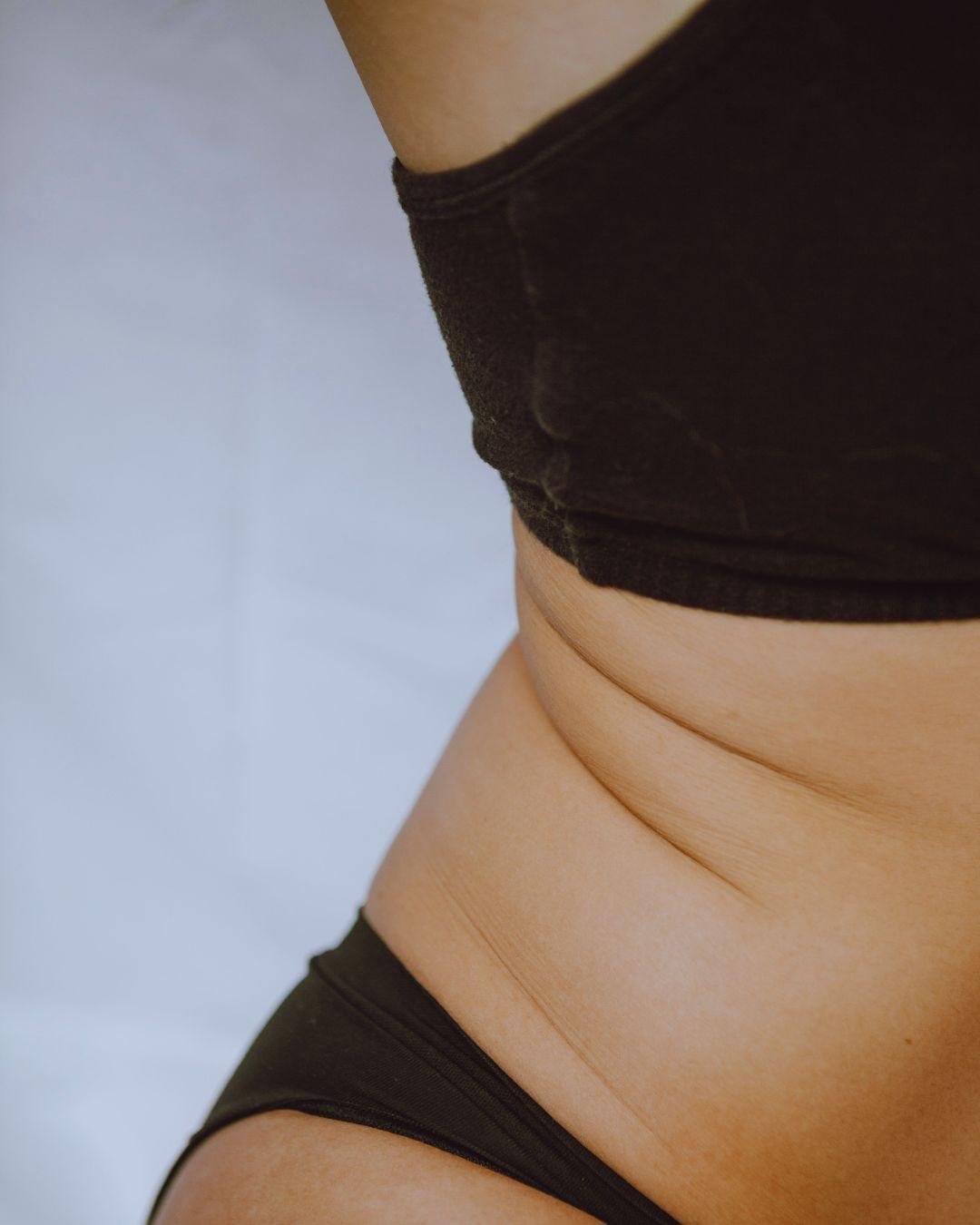
Shape & metabolism
MedWave describes 635nm light as a body-contouring support rather than a way to remove fat cells. Sessions may be paired with movement or a vibration plate, hydration and consistent lifestyle habits.
Measurements can be tracked from a baseline, but body composition, routine and individual response all affect the outcome. It is not a substitute for nutrition, movement or medical weight management.
Common areas: waist · hips · thighs · arms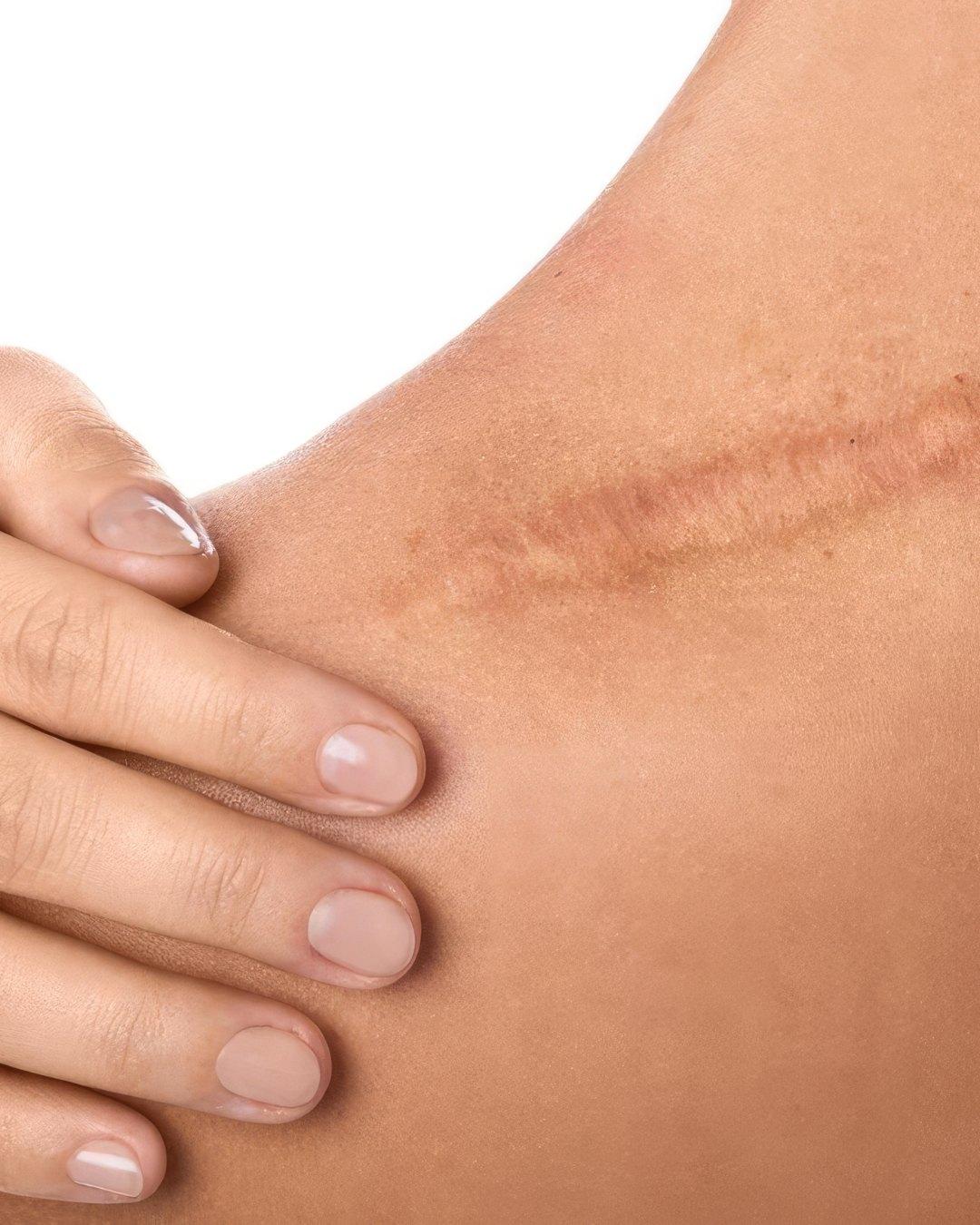
Wound care & tissue repair
Photobiomodulation is studied as an adjunct for cellular activity, local blood supply and tissue-repair processes. It may be used within a clinician-managed plan for selected wounds, surgical sites or scarring.
Every wound must first be assessed. Infection, poor circulation, diabetes and other factors can change what safe care looks like.
Always alongside existing wound care—never instead of it.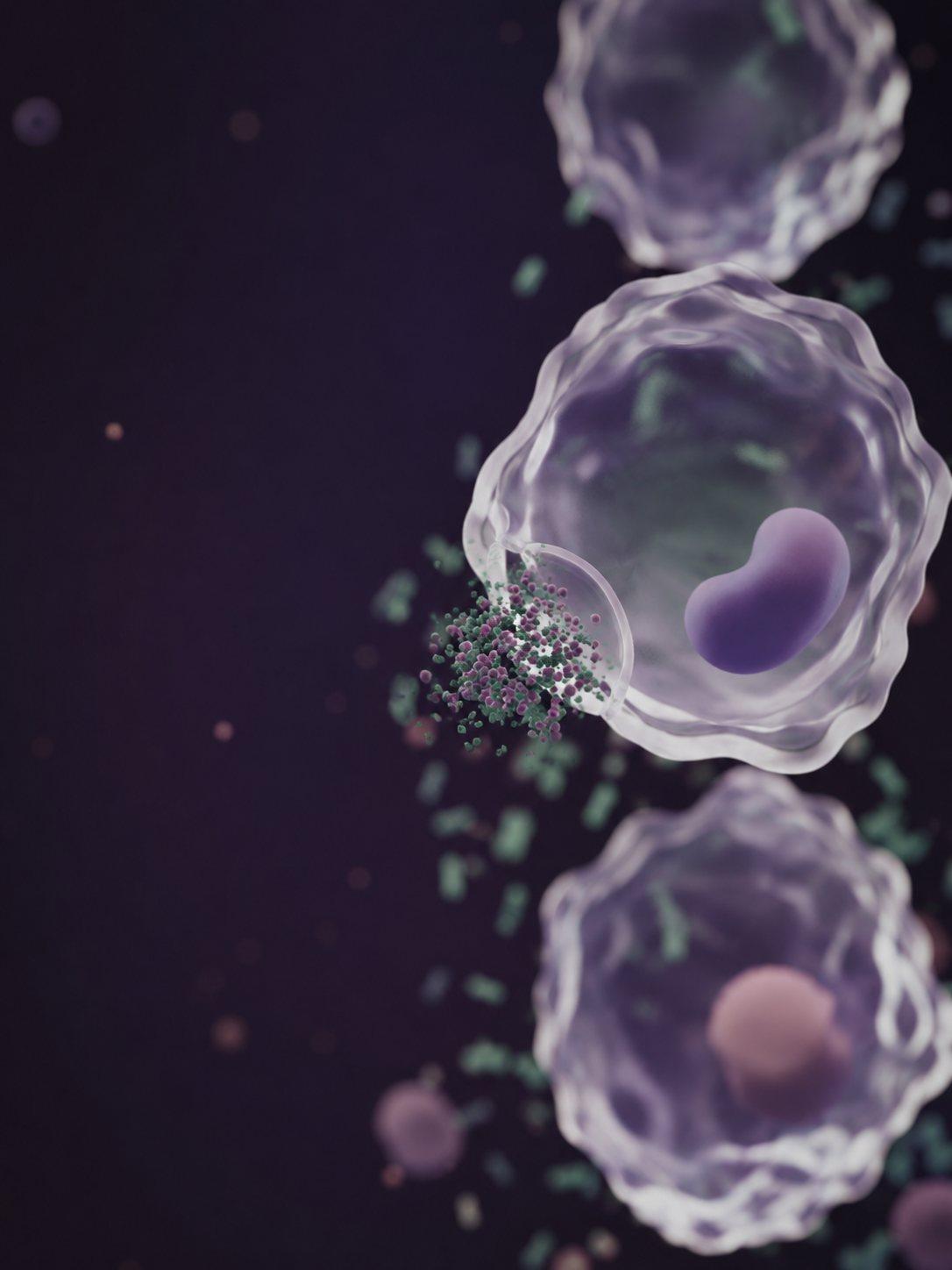
Neurological support
Near-infrared photobiomodulation is being studied for effects on mitochondrial activity, blood flow and inflammatory signalling in nerve tissue.
Numbness, weakness, burning pain or changing neurological symptoms need clinical assessment. MedWave is supportive care, not a diagnosis or substitute for neurological treatment.

Everyday wellbeing
Some clients report feeling calmer, recovering better or sleeping differently during a consistent course. Research into whole-body effects is still developing, so these are possible experiences—not promised outcomes.
Your progress is reviewed against the reason you booked, not a fantasy checklist assembled by the internet.
The technology
The MedWave client guide describes two professional panels. The panel, intensity and treatment area should match the goal—not whichever setting sounds most impressive.
Aesthetics & surface tissue
Pain & deeper tissue
Ask which panel is available and appropriate for your appointment. Device choice follows assessment.
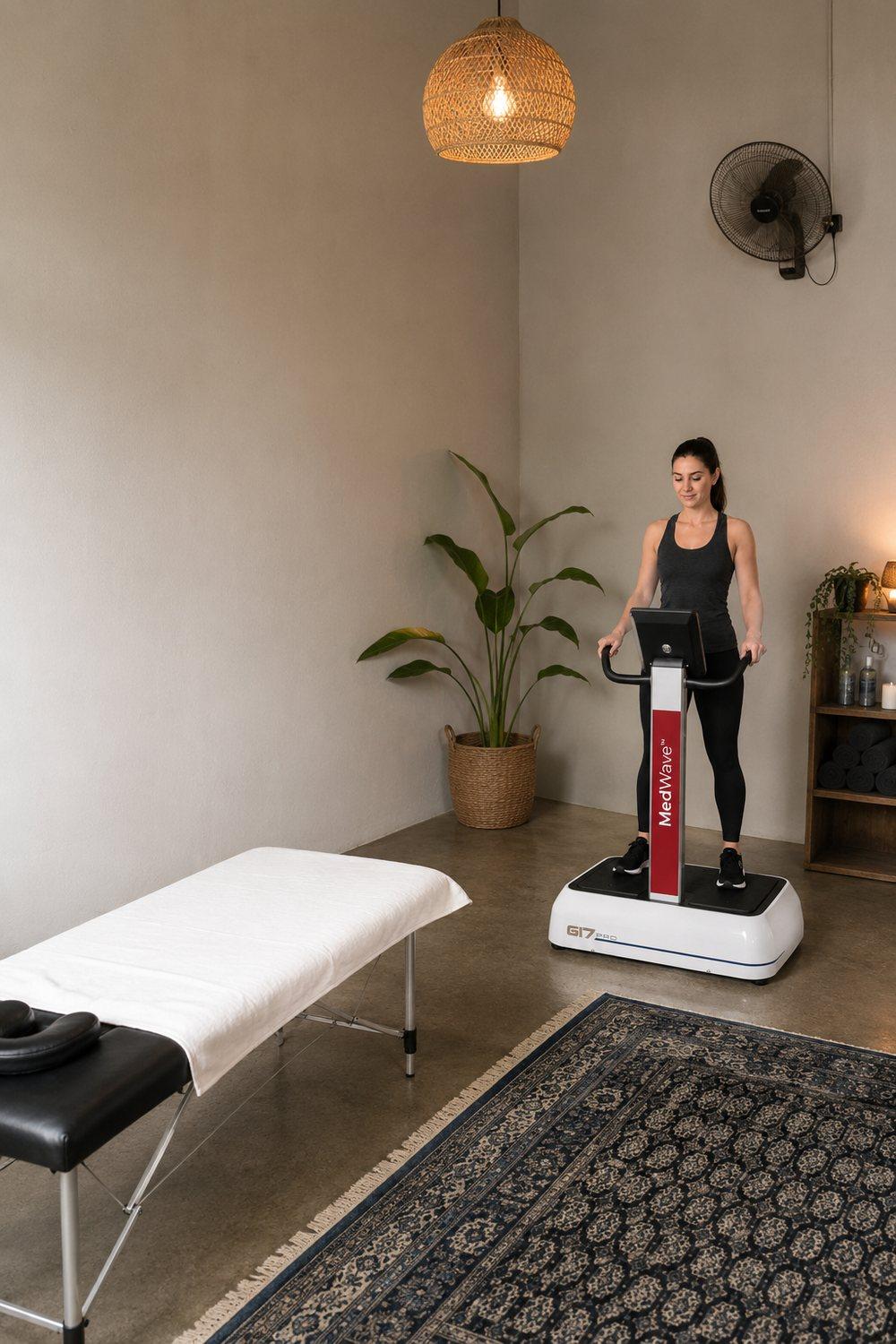
When the vibration plate is included
StimulateRapid muscle contractions create movement and increase muscular activity.
MobiliseMovement supports circulation and prepares the body for the planned light session.
TreatThe selected panel delivers the wavelength and dose chosen for your goal.
RecoverGentle movement, hydration and circulation support complete the session.
The vibration plate is not suitable for everyone, including some people with implants, recent surgery or certain medical conditions.
Your first visit
No theatre, no drama. Just a proper screening, the right setup and a short session.
Your goals, health history, medication and any reason to seek medical clearance first.
The treatment area should be clean and dry. Makeup, sunscreen and lotion are removed where needed.
Protective eyewear is mandatory. Closing your eyes alone is not considered sufficient.
The panel is positioned for the planned area. Full-body sessions may be split between front and back.
There is no expected downtime. Hydration and gentle movement may be recommended afterwards.
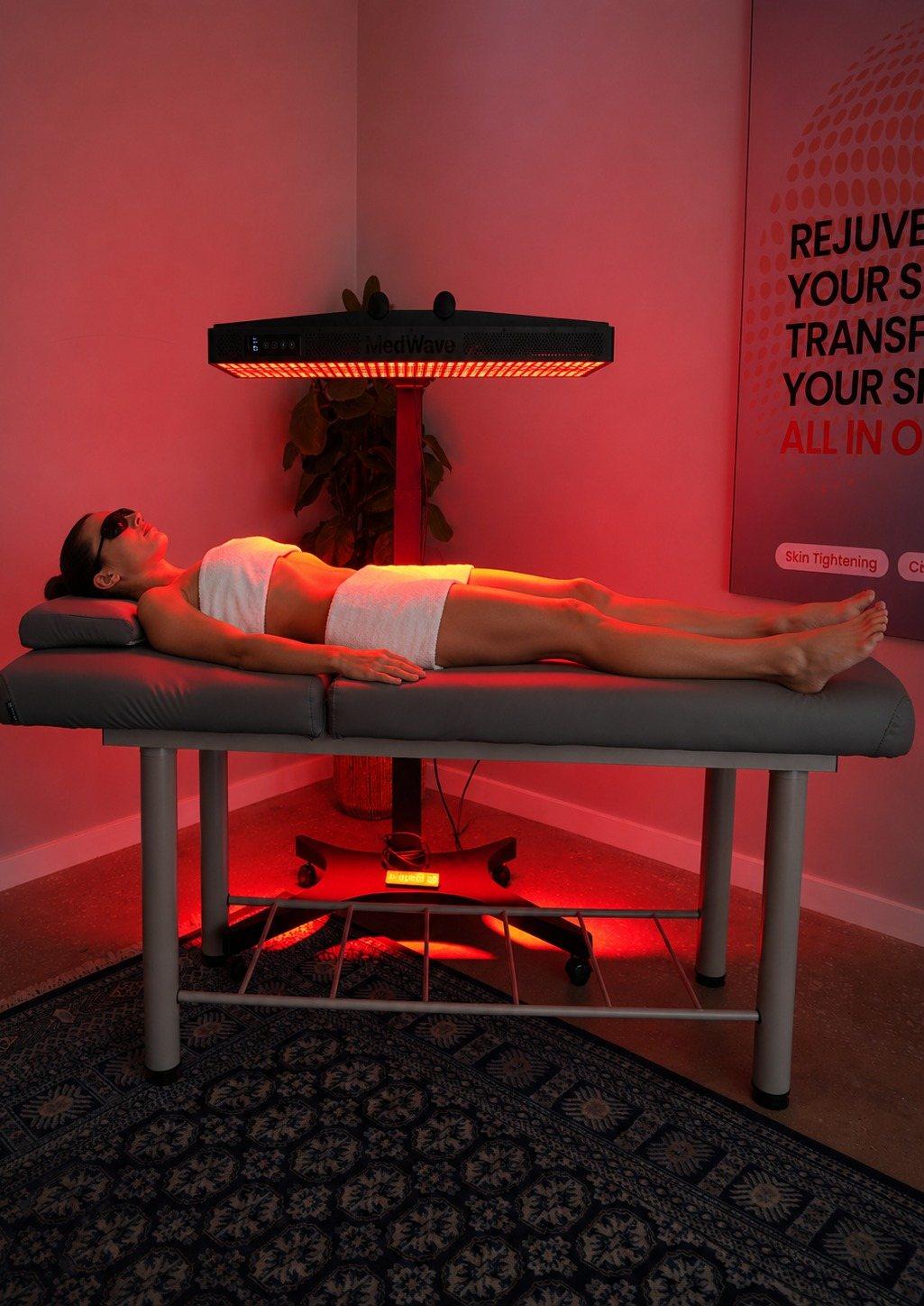
What to expect
Photobiomodulation is usually planned as a course rather than a one-off fix. The brochure suggests two to three sessions a week with at least 24 hours between them; Arisha will set an individual schedule.
Some people notice relaxation, temporary easing of discomfort or a brighter-looking complexion.
Changes may begin to feel more consistent when sessions are regular and appropriately spaced.
Skin, recovery or measurement changes—when they occur—are more likely to become noticeable over a course.
A practitioner may review progress and decide whether maintenance sessions make sense.
Before you book
A short health screen matters. Tell Arisha about diagnoses, recent procedures, implants, pregnancy and every medication or supplement you take.
Real clients · supplied photographs
These photographs appear in MedWave’s supplied client guide and were not taken at Arisha’s practice. They show individual examples, not a guaranteed outcome.
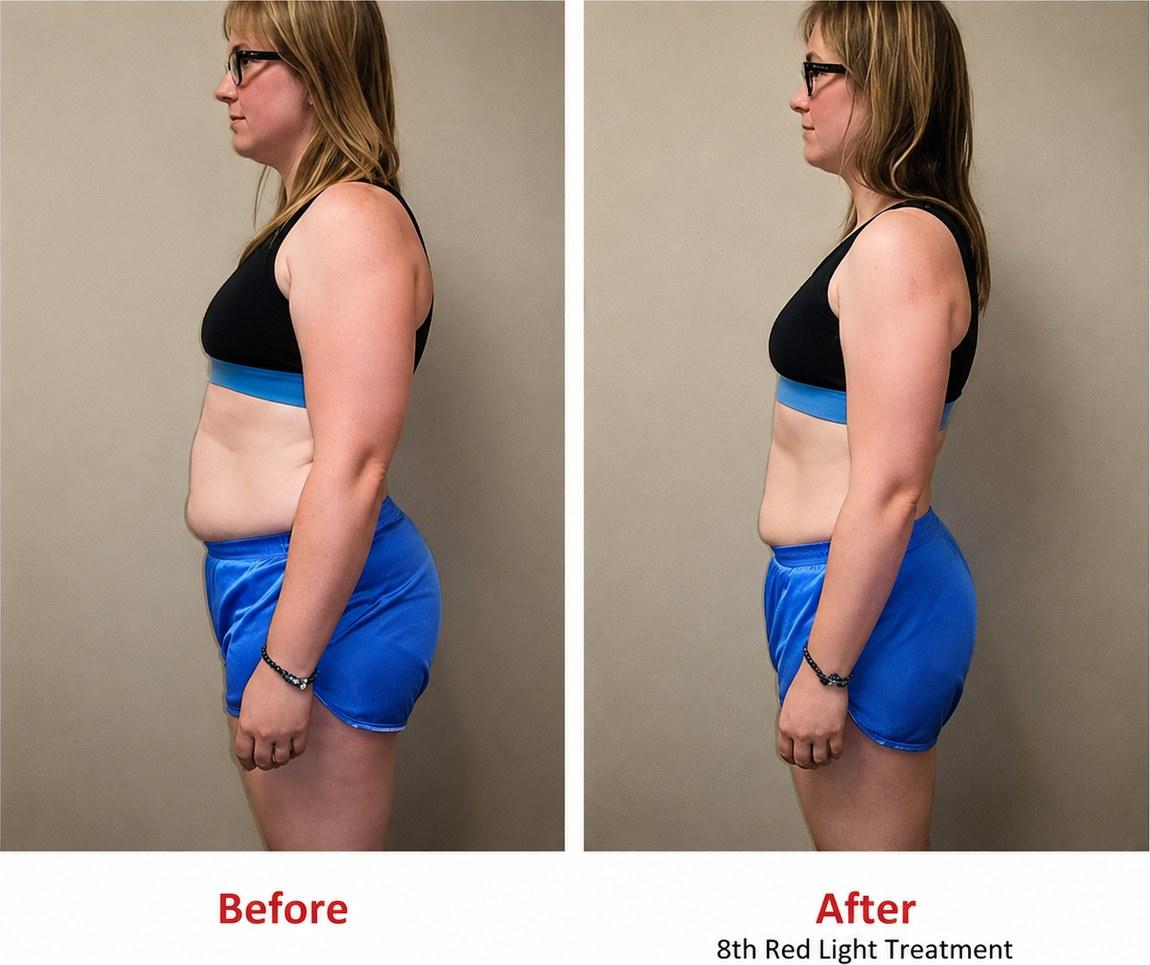
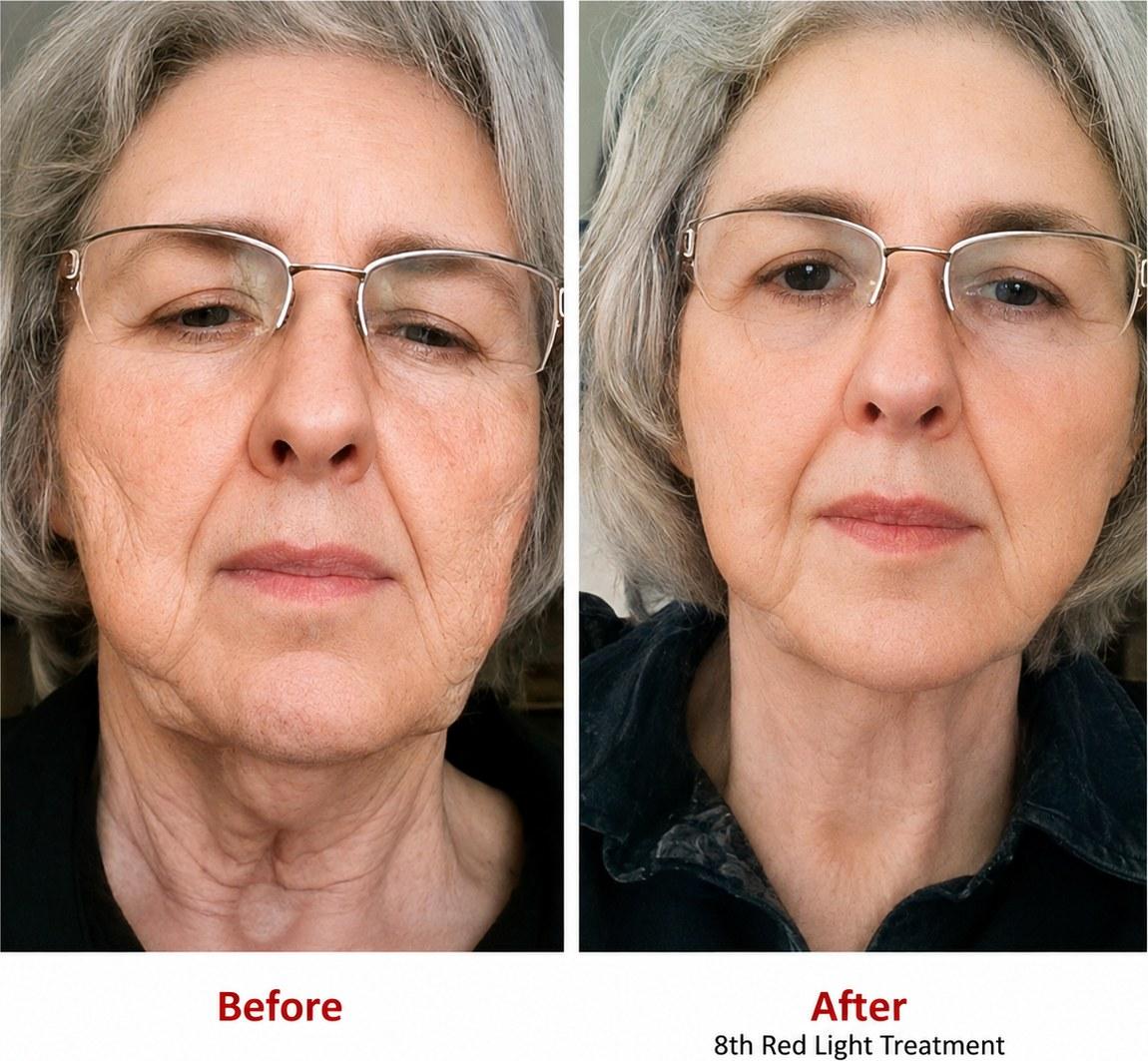
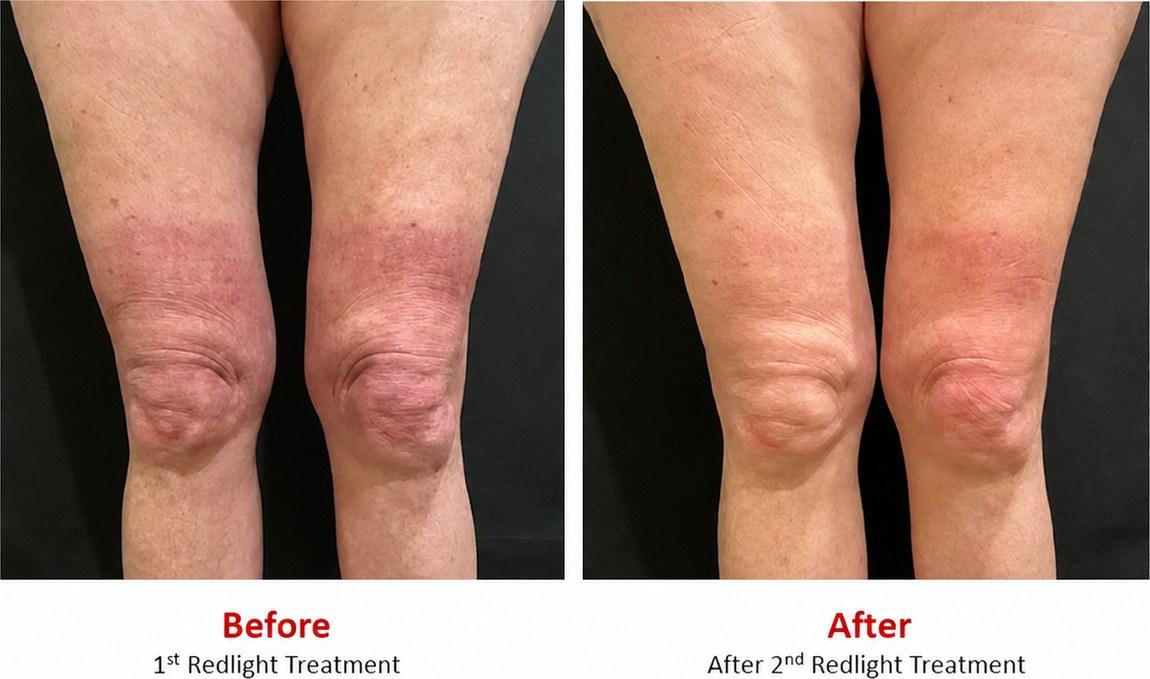
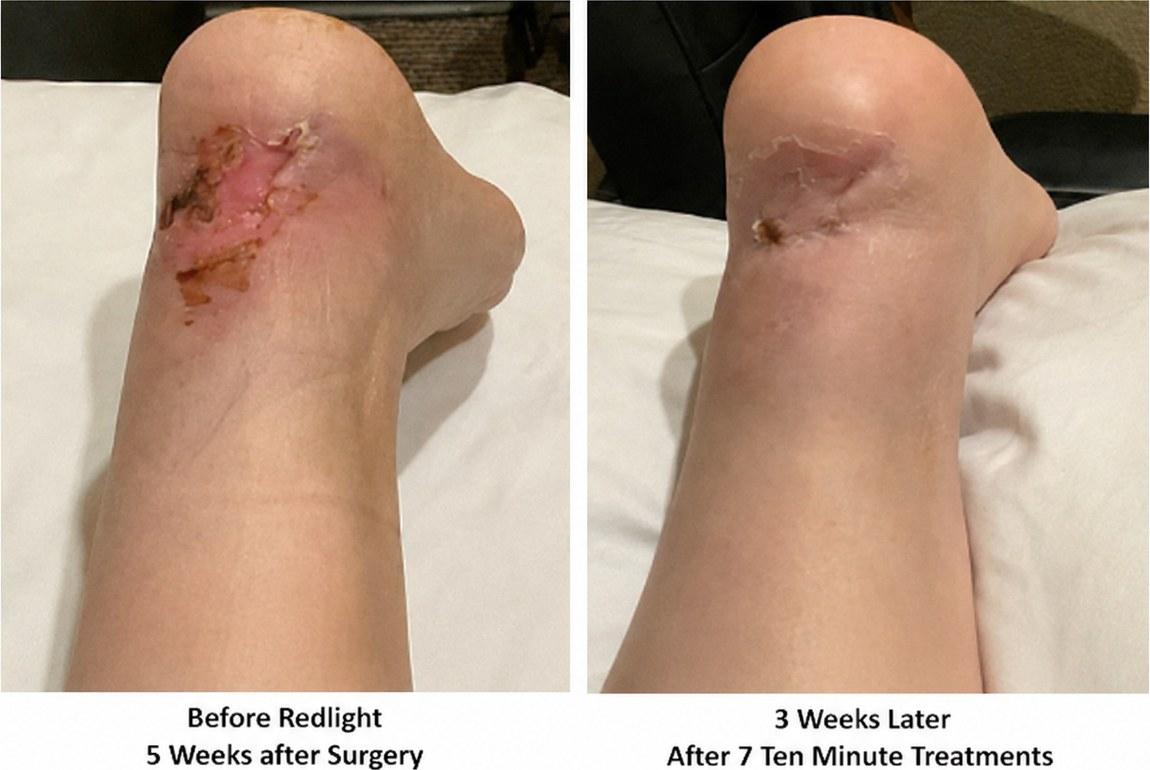
Photographs and reviews are reproduced from the supplied MedWave guide, which states that they were published with client permission.
Individual results vary. Measurements, symptoms and photographs should be reviewed consistently and honestly.With your first session
The MedWave client pack includes a practical guide with more than 50 recipes built around anti-inflammatory eating. Ask Arisha when booking whether the complimentary guide is included with your first session.
Ask when you book
MedWave questions
No. Sessions are warm and generally painless. Many people find the treatment relaxing.
No. Sunbeds use ultraviolet light. MedWave sessions use visible red and near-infrared wavelengths and contain no UV.
The treatment is non-thermal and contains no UV, so it is not intended to burn or tan the skin.
Only the area being treated needs to be exposed. Arisha will explain the setup and protect your privacy.
The treatment area should be clean and dry. Some products may react to light or block it, so remove them unless advised otherwise.
Sessions are generally 10–20 minutes. The guide suggests two to three sessions a week with a day between them, but your plan may differ.
No downtime is expected. You can usually return to your normal day immediately.
Some people notice short-term effects early; visible or durable change generally needs consistent sessions over several weeks. There is no guaranteed timeline.
Photobiomodulation is non-invasive and has a long clinical history, but safe use still depends on appropriate screening, dosing and eye protection.
Full attention changes the quality of care.
Every patient receives a one-to-one appointment and an individual treatment plan.
Meet Arisha
Arisha completed her BSc Physiotherapy at the University of the Western Cape and has more than two decades of inpatient and outpatient experience. She has a special interest in pain management, stress-related headaches, wellness and mindfulness.
Her approach is practical and personal: understand what is limiting you, agree on a realistic plan and work towards progress you can feel in daily life.
Talk to Arisha →Locations
Monday to Friday, 9:00–16:00. Appointments are confirmed directly with the practice.
Request an appointment
Pick your preferred service, location, date and time. Submit the booking request form and we will get back to you to schedule your appointment.
Useful to know
Not for a general physiotherapy assessment. If your situation needs medical clearance or another clinician’s input, Arisha will explain that clearly.
Bring any relevant reports, scans or referral notes and wear comfortable clothing that allows the affected area to be assessed.
No treatment is universal. Your health history, medication and goals will be reviewed before a session is recommended.
No. The calendar sends your preferred appointment details to the practice. Arisha will confirm the final time with you directly.